Pain is not a luxury trouble in emergency situation care, it is the presenting signs and symptom that forms every choice you make in the very first minutes. Treat discomfort successfully and you acquire trust fund, enhance analysis accuracy, and frequently avert problems. Get it incorrect and the whole experience tilts. The certified device PUAEME008 Supply pain management sits directly because room. It gives paramedics, first -responders, occasion medics, and professional assistance team a functional, defensible framework to lower pain safely in unchecked environments.
I have actually educated and applied this system throughout ambulance services and remote centers, and the same themes repeat: the methods look straightforward theoretically, yet real scenes are untidy. You need to protect a line of vision to what matters most, scoot without cutting edges, and document as if an auditor rides in the dive seat. This write-up breaks down what the training covers, why it is structured the way it is, and just how it links to broader pain administration training courses for registered nurses and physiotherapists that support prehospital teams or operate in urgent-care settings.
Where PUAEME008 Suits the Training Landscape
The PUAEME008 supply discomfort monitoring system is typically embedded within public security and emergency feedback credentials. You will see it paired with basic life support, oxygen therapy, and analgesia modules in certificate-level packages developed for functional -responders. It does not pretend to be a comprehensive discomfort fellowship, which is ideal. The emphasis is secure, prompt analgesia with minimal resources, frequently prior to a conclusive diagnosis exists.
For clinicians coming from medical facilities, this can seem like an action down in pharmacology deepness, yet in truth it is an action up in threat monitoring. Emergency situation discomfort management on an aesthetic at 3 a.m. differs from an ED workstation with full monitoring and pharmacy access. The system adjusts choices to that field truth: short evaluations, repeat observations, conventional dosing, and strong attention to contraindications that are simple to miss when the wind is up and the person is light and sweating.
This system can sit together with a certificate training course hurting management offered to multidisciplinary personnel. The distinction is focus. A pain monitoring certification course in a health center system studies multimodal and chronic structures. PUAEME008 anchors intense, often terrible, discussions with brief half-life options, simple distribution systems, and unambiguous documentation.
What the Device Really Covers
Training companies vary in shipment, however the core results remain constant. You discover to evaluate discomfort rapidly making use of typical scales, to choose ideal analgesic paths within your range, to provide, check, and after that reassess. You also learn to rise when the photo does not fit or pain remains uncontrolled.
Typical scope consists of:
- Scene-based analysis and differential framing of pain in the first five mins: trauma versus clinical, red flags that imply time-critical pathology, and how pain itself can mask or simulate severity. Analgesic alternatives lined up with the -responder's extent and territory. The familiar triad is inhaled methoxyflurane where permitted, dental or transmucosal representatives, and basic parenteral choices for those recommended. Some services consist of intranasal opioids or ketamine under specific methods. The device teaches indicator thresholds and stop rules. Non-pharmacological approaches like positioning, immobilisation, splinting, ice or warmth when suitable, diversion, and assisted breathing. In hectic changes these get neglected, yet they typically cut discomfort scores by 2 or 3 factors prior to any drug takes effect. Monitoring for effectiveness and unfavorable impacts. You discover to cycle monitorings at specified periods and to correlate subjective discomfort scores with unbiased pens: respiratory system rate, end-tidal carbon dioxide where available, psychological condition, perfusion, and movement. Communication and consent. The device stresses discussing options plainly, acquiring educated permission or proceeding under indicated permission where ability suffers, and recording the reasoning in clear language.
The assessment is useful. You go through circumstances that range from an ankle joint fracture at a sporting activities event to a confused older grown-up with abdominal discomfort. Trainers will view how you verbalise danger, exactly how promptly you observe transforming vitals, and whether you request for aid early. Paper expertise aids, however it is the behaviors under time pressure that pass or fall short you.
Why Emergency situation Pain Administration Demands a Different Lens
In controlled environments it is easy to build an excellent pain ladder. Visible, priorities change. The most common mistake I see is incorrect precision, a propensity to search for the ideal diagnosis before delivering first-line relief. In a roadside collision with an apparent defect, awaiting a complete differential misses the point. Discomfort itself drives tachycardia and hyperventilation, worsens stress and anxiety, and obstructs meaningful assessment. Analgesia ends up being a diagnostic device. As the discomfort goes down, you can palpate, reposition, and test function more accurately.
The 2nd distinction is consent under uncertainty. The person is usually anxious, hypoxic, or intoxicated. You still aim for approval, but you mount it crisply. "I can provide a fast-acting breathed in discomfort medicine. It diminishes swiftly, some people really feel lightheaded. Would you such as that while we splint your leg?" Then you stop briefly, see their eyes, pay attention for the yes. Great training shows this cadence.
Finally, the system respects that responders usually work alone or as a set without a physician on the radio. Methods need to be clear, not based on lengthy consults. If the plan permits methoxyflurane approximately a specified optimum, you learn to dosage, monitor, and quit within those limits. If intranasal fentanyl is consisted of, you find out precise quantities per nostril, spacing, and saturation thresholds that trigger an adjustment of plan.
The Pharmacology You Actually Use
Most PUAEME008-aligned programs prioritise representatives that are mobile, fast-onset, and very easy to titrate. Specific formularies depend on the solution, however several patterns appear once more and again.
Methoxyflurane, where available, is an area workhorse. It is breathed in, self-administered with mentoring, and it permits a secured kind of self-titration. The training emphasises guidance, limiting overall dosage, and acknowledging when a patient's technique falls short due to anxiety or exhaustion. It likewise shows environmental safety. The scent is unique, and in improperly aerated areas carriers can really feel boring or headachy. Break a window, step outside if useful, and revolve jobs so the same crew participant does not float by the mouthpiece for twenty minutes.
Intranasal opioids, generally fentanyl, load the gap when inhaled alternatives are contraindicated or poor. The intranasal route stays clear of needle stick danger and moves quickly with vascular nasal cells. You learn to split the dosage between nostrils, change for age and frailty, and pay ruthless attention to respiratory tract tone as soon as discomfort decreases. You practice what to do if respiratory system price slips below thresholds, when to rearrange, when to add oxygen, and when to reverse.

Ketamine, in some extended-scope solutions, gains its place for traumatic discomfort that stands up to various other representatives, particularly when hypotension makes opioids dangerous. The device does not turn -responders right into anaesthetists. It demands precise dosing, clear contraindications like psychosis, and robust surveillance. The benefit is enormous in remote settings where extrication and cot activity turn mins into an hour.
Paracetamol and non-steroidal anti-inflammatories do not grab headlines, yet their additive effect issues. Early enteral dosing together with fast-acting agents develops a bridge that holds through transportation and handover. The system educates risk-free NSAID use, renal cautions, and gastric defense for older adults.
Non-Drug Techniques That Matter More Than You Think
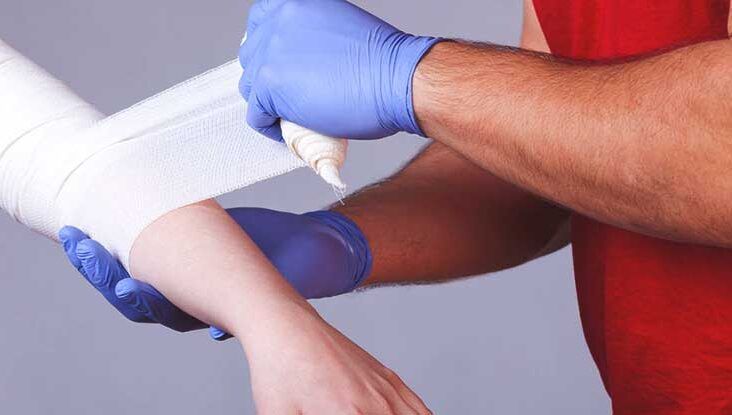
Every discomfort monitoring training course chats up non-pharmacological approaches. In emergency situation treatment, those techniques are not "good to have." They are the very first intervention. Splinting an unpredictable ankle joint, extra padding a backboard stress point, elevating a limb to lower pain, and coordinating a calm environment all change the client's experience prior to a solitary dosage. I often ask trainees to attempt their pain range once more after proper positioning. The number routinely drops by two. That drop gets time and decreases complete medication load.
Guided breathing looks basic, but lots of -responders hurry it. The method is to couple your breath and count out loud, sluggish enough to really feel awkward. 5 seconds in, hold for a beat, 5 secs out. Utilize your hand on their shoulder to set the pace. After a min the jaw unclenches, and you can position the screen leads without a fight.
Cold and warmth continue to be low-risk accessories if you value contraindications. Intense sprains like ice bags in the initial hours. Spasm-dominant low back pain may respond to warmth if there is no uncertainty of infection or trauma. The training educates you to ask short, targeted inquiries that discover when an easy pack assists greater than a 2nd drug.
Documentation Becomes part of the Therapy
I treat documentation as component of analgesia. Good notes protect individuals, support professional thinking, and speed ED decision-making. PUAEME008 drills a straightforward structure: baseline pain score, location and high quality descriptors, picked intervention with reasoning, the moment of management, and a re-evaluation at specified periods. If something feels incorrect, create that down also. "Pain disproportionate to findings" is not a complaint, it is an analysis clue. It signals compartment disorder, vascular concession, or occult abdominal pathology.
Audit teams watch for patterns. If every client reports 10/10 discomfort prior to and 2/10 after, something is off. Find out to calibrate the range with individuals. "No is nothing in any way, ten is the most awful pain you can imagine. Where are you right now?" After that anchor it with their very own words. After treatment, request the new number and what changed: "I can move my leg now," or "it still stabs when I breathe." That nuance helps the following clinician choice up the thread.
Safety Nets and Red Flags
The most experienced responders carry 2 psychological manuscripts: one for routine pain care and one for the exemptions. The device clearly educates both. Warning include abrupt serious frustration unlike previous migraine headaches, chest pain with diaphoresis and radiation, stomach pain with securing and hypotension, back pain with neurological shortages, and arm or leg pain with pallor, pulselessness, or paraesthesia. Analgesia does not stop since a red flag exists, yet lines of interaction open immediately. You inform receiving teams, reduce on-scene time, and keep medication choices conventional if they could mask crucial signs.
Paediatric discomfort is its very own globe. Children under-report or misreport, and troubled parents amplify or subdue hints. PUAEME008 utilizes age-appropriate scales like the Wong-Baker faces or empirical tools for preverbal kids. Dosing ends up being weight-based and margin for error tightens. I teach a routine of checking out doses from 2 independent sources on scene, such as a laminated card and a calculator app, to stop easy transpositions.
Older grownups need a various caution. Kidney function, polypharmacy, and cognitive standard are usually unknown. Low-and-slow application, longer monitoring, and very early factor to consider of non-opioid complements minimize damage. If a person with a fall presents with light head strike and a regular examination however takes anticoagulants, analgesia continues, yet you support for imaging and cautious handover.
How PUAEME008 Intersects With Various Other Disciplines
Pain administration training courses for registered nurses and discomfort management programs for physio therapists frequently target subacute or persistent problems. Yet there is an effective overlap with this emergency situation system. Registered nurses in urgent treatment and remote facilities take care of first discussions when rescue hold-ups stretch. A pain administration accreditation training course that consists of severe triage skills, secure breathed in or intranasal choices, and monitoring boosts end results in those settings. Physiotherapists operating pitch-side or in commercial websites frequently come to be initial medical professionals to see injuries. Short courses in pain administration that mirror PUAEME008 principles help them stabilise while waiting on transport and connect efficiently with getting teams.
For groups that span roles, a typical language matters. Agree on range usage, dosing language, and handover framework. I have seen multidisciplinary teams cut ten minutes off scene time simply by aligning on that leads analgesia and who files. That is not trivia, it is the distinction between a comfortable person and one who gets here clenched and exhausted.
Choosing a Service provider and What Excellent Training Looks Like
A provide discomfort administration course should leave you positive to act under stress, not just to pass an analysis. Try to find companies who instruct with reasonable situations, real gadgets you will certainly utilize in the field, and trainers who have current functional experience. Ask just how they attend to adverse occasions. If the solution is "we cover that theoretically," maintain looking. You require to rehearse apnoea drills, vomiting throughout inhalation therapy, and managing agitation after ketamine, even if your solution rarely releases it.
Credentialing issues. Seek a pain management certification lined up with your jurisdiction's requirements and identified by your service. Paper alone is not enough, however it opens up doors. If your occupation arc includes innovative technique duties, a pain monitoring certification that consists of wider pharmacology and multidisciplinary study enhances PUAEME008. Ladder your training attentively: begin with the emergency device, add a certification program hurting monitoring for breadth, after that target specialist components relevant to your setting.
Practical Tips From the Field
These are the small actions that make huge differences over years of practice.
- Prepare your analgesia package like a cabin, with the same layout every change. Muscle mass memory under stress protects against application mistakes and speeds distribution. If you share kits across teams, standardise the format and label syringes and atomisers clearly.
Triage your discussions. People in pain find out about one sentence in 3. Lead with what issues: "I can decrease your discomfort now. Below is how it functions." After that take care of permission, risks, and following steps in brief, concrete expressions. Check understanding with a concern that demands an option, not a yes/no nod.
Use time checkpoints. In my teams we call the very first 5-minute reassessment out loud and document it within one minute. That tiny routine boosts both security and handover quality.
Treat nausea or vomiting swiftly. Vomiting weakens patient count on and complicates air passage security. If your procedures permit, couple analgesia with an antiemetic for risky situations: motion in the rear of a rig, distressing pain, or prior history.
Hand over the person with a discomfort narrative. "Showed up to 8/10 pain in the right hip, offered inhaled analgesia with a decrease to 4/10, after that intranasal opioid with a decline to 2/10. Secure vitals throughout. Pain spikes to 6/10 when we roll. Splinted and padded." This thread overviews the receiving team to proceed the strategy instead of restart from zero.
Assessment and Competency: What to Expect on the Day
The sensible analysis in PUAEME008 usually unravels throughout 2 to 3 circumstances and a brief created part. For the scenarios, assessors see your flow greater than your memory of minute details. They wish to see you check for danger, recognize and measure pain, pick a treatment within range, and after that follow up with monitoring and documentation.

If you blank on a dosage, say so, find the recommendation, and continue correctly. That earns more trust than guessing. Great site If the individual's discomfort does not change, you intensify within the protocol and ask for clinical guidance if indicated. They will likely introduce a curveball: nausea, a drop in saturation after opioid, or a moms and dad that declines an intervention for a youngster. Keep calmness, show alternatives, and document deviations.
For the written section, expect short-answer questions on approval, contraindications, and negative effects. The goal is not to trap you, however to verify that you understand why the protocol states what it says.
Connecting PUAEME008 to Profession Growth
Many responders view discomfort management training as a checkbox. That offers it short. Skills in analgesia associates with general scene leadership. You communicate much better since you relieve enduring early. Clients talk with you, you gather more clear histories, and your vitals are much more trustworthy since they are not distorted by distress. Supervisors notification. When placements open for group leaders or clinical support policemans, the -responders who handle pain cleanly generally rise.
For registered nurses, a pain monitoring accreditation training course that includes prehospital modules opens up urgent-care roles and event medicine job. For physio therapists, adding emergency situation pain administration skills supports your place on sports medicine groups and work health programs. A discomfort administration certificate does not change professional levels, yet it expands your range safely.
A Note on Ethics and Equity
Pain is not distributed uniformly throughout populations. Cultural expression of discomfort varies, and implicit predisposition forms just how clinicians respond. The most effective pain management training programs address this head-on. You learn to use consistent ranges, not sixth sense based on that "looks" suffering. You find out to ask open inquiries, and to verify reported pain even when it exceeds your assumption for the visible injury. In remote and Indigenous communities, trust can be slim. Bringing prompt analgesia without rubbing develops bridges. That matters more than the majority of procedures admit.
Final Thoughts: Make Discomfort Alleviation a Reliable Habit
PUAEME008 orders habits that experienced medical professionals currently practice. Analyze swiftly, treat early, combine non-drug and drug measures, screen very closely, and file without dramatization. It gives you a structure that holds when adrenaline spikes or when fatigue dulls judgment at 4 a.m. It also creates a common language across groups. If you operate in emergency care and you do not yet hold this device, it belongs on your list of discomfort management training programs to complete. If you already hold it, review the abilities yearly. Bring a coworker, swap duties, and audit each various other's charts for a shift. The people will not remember your certificate number. They will bear in mind being listened to, being assisted, and being able to take a breath without bracing every rib. That provide pain management course is the heart of emergency situation pain management.
For those developing wider paths, blend this training with a discomfort monitoring certification course that explores multimodal strategies, pharmacovigilance, and interaction throughout disciplines. Nurses that anticipate to triage and stabilise must consider pain monitoring training for registered nurses that consists of intranasal analgesia, age-specific scales, and rise protocols. Medical professionals in sports and bone and joint care can take advantage of discomfort management courses for physio therapists that mirror severe treatment truths, consisting of splinting and event-side decision-making. Whether you choose a short training course in pain management or a much more extensive discomfort administration certification course, allow the PUAEME008 mindset anchor your technique: ease pain early, securely, and with adequate humility to adjust as brand-new info arrives.